No lock-in
No retainer, no upsell, no "phase 2". The code ports cleanly to your own infra.
Industry R&D projects · running since 2024
We help companies, hospitals, and research groups test whether an ML idea holds up against their data.
We are not a production vendor. We are the right fit when the next step is evidence, not another slide deck.
Sprint shape
Industry projects are planned as six-to-ten-week sprints. Team shape, technical scope, access setup, and handoff target are set before kickoff. A typical sprint has partner check-ins, a mid-sprint review, and a final handoff.
Before kickoff, we need agreement on these four. If any are unclear, we do not start. Weak problems, blocked data, and software plumbing with an ML label should get a fast no.
You have a dataset, or a credible path to sharing it before kickoff.
The hard part requires a learned model. Generic automation, rule engines, and pipeline plumbing with a model bolted on do not.
Someone on your side can meet weekly, answer domain questions, and unblock access issues.
The first useful answer can fit into a sprint without pretending it is a full product build.
Example problem spaces
Areas where past and current sprints have landed.
No retainer, no upsell, no "phase 2". The code ports cleanly to your own infra.
NDA before access. Data stays on partner or ReLU-controlled machines.
Targets are written into the scope, checked at the mid-sprint review.
Deliverables are the partner's by default. We may describe the project at a high level for recruiting, with your sign-off.
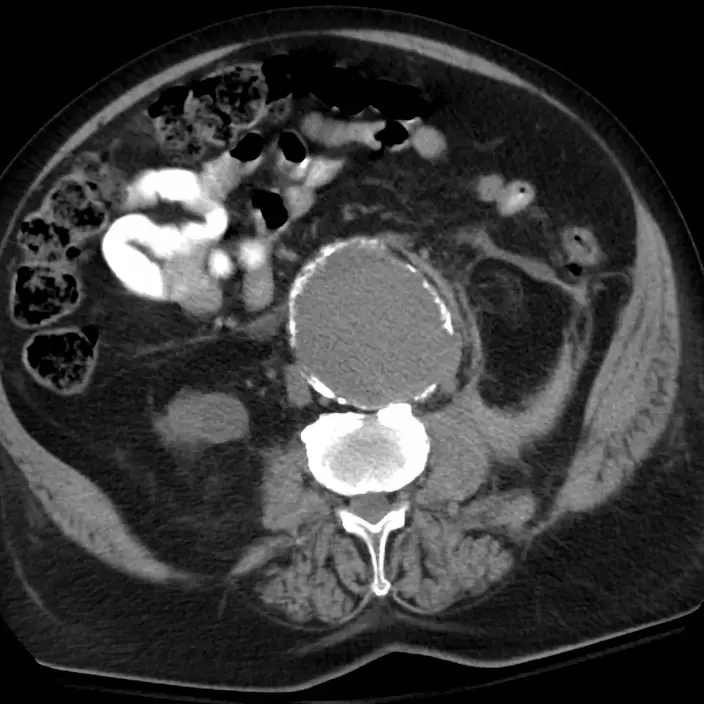
Oslo University Hospital · Fall 2025 to Spring 2026
Testing whether a model can flag incidental abdominal aortic aneurysms in CT scans ordered for unrelated indications.
Problem. AAA cases are rare, scan protocols vary, and the aorta is a small part of each volume.
Output. Segmentation baselines, preprocessing experiments, inference outputs, and handoff notes for OUS review.
For industry work, compute is agreed during scoping. Depending on data constraints, work may run on partner infrastructure, ReLU-controlled local machines, or another approved setup.
ReLU's research group has 1,400 H100 hours through the Telenor AI Factory Catalyst programme. A dedicated ReLU office and local compute setup are planned for Fall 2026.
Email contact@reluntnu.no with the problem, the data you have, and any hard constraints.